
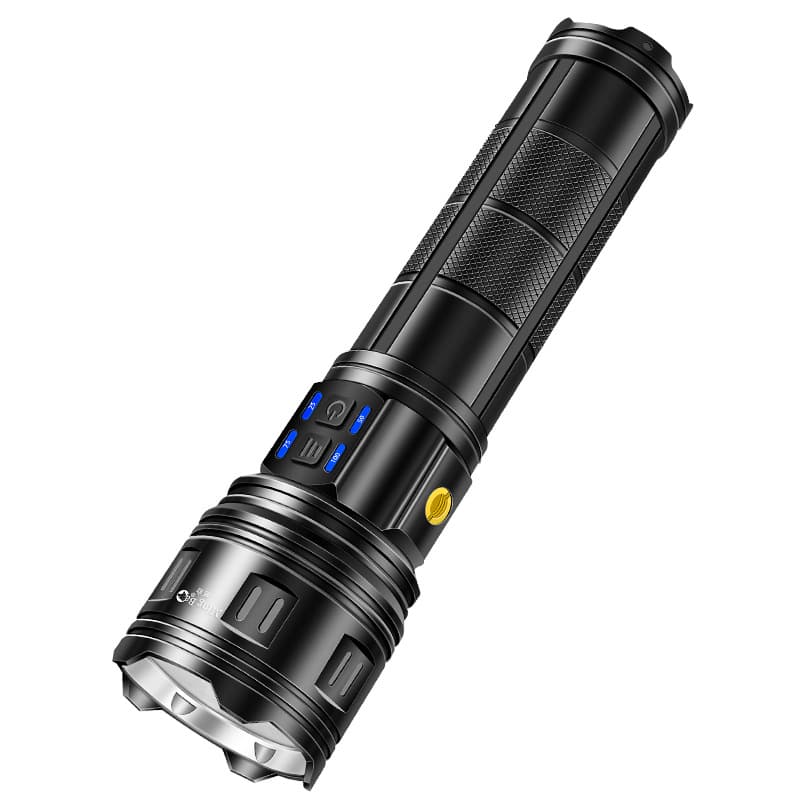
LED Flashlight vs White Laser Flashlight: Which Technology Offers Better Margins for Distributors in 2026?
For wholesale buyers choosing between LED and white laser flashlight technology, the better margin depends on target market, beam distance requirements, and pricing tier. Compare emitter costs, optical complexity, end-user willingness to pay, and after-sales support before selecting a product line.
How LED and White Laser (LEP) Technologies Differ
Light-emitting diode (LED) flashlights dominate the consumer and professional markets because the technology is mature, component sourcing is broad, and manufacturing processes are well established. White laser, or laser-excited phosphor (LEP), technology uses a laser diode to excite a phosphor layer, producing a highly collimated beam with exceptional throw distance.
The core difference for distributors is not just output specification but product positioning. LED flashlights serve general-purpose, close-to-medium range applications. LEP flashlights command attention in long-range search, tactical, and industrial segments where beam distance is the primary purchase driver. Understanding which technology aligns with your customer base is the first step in margin optimization.
Component Cost and Manufacturing Complexity
LED emitters are available from multiple suppliers at various price points, giving manufacturers flexibility in product positioning. LEP modules are produced by a smaller number of specialized suppliers, and the optical assembly requires tighter tolerances. This affects both unit cost and minimum order quantities.
Distributors should request cost breakdowns from manufacturers that separate emitter cost from optical and driver costs. For LED models, ask whether the manufacturer uses brand-name emitters or generic alternatives, as this affects both performance consistency and warranty exposure. For LEP models, confirm the module supplier and whether alternative module sources exist if the primary supplier faces shortages.