
The 7 Stations Every Flashlight Must Pass Through
Summary: A quality flashlight passes through 7 critical stations before shipping: material inspection, CNC machining, surface treatment, assembly, functional testing, mechanical testing, and final inspection. Understanding this production line helps buyers evaluate whether a manufacturer has the capability to deliver consistent quality.
Introduction
When you order 5,000 flashlights, you are not just buying a product. You are buying the result of a production line that involves dozens of steps, multiple machines, and many workers. Understanding these stations helps you ask the right questions and spot potential problems before they affect your order.
This article breaks down the 7 stations every flashlight must pass through in a professional manufacturing facility. Use this as your checklist when evaluating a new supplier.
Station 1: Material Incoming Inspection
Before anything is manufactured, raw materials are checked. Aluminum rods are measured for diameter consistency. LED reels are tested for forward voltage and color bin. Batteries are checked for capacity and internal resistance.
A supplier who skips incoming inspection is building products with unverified materials. This is the fastest path to quality failures in the field.
Station 2: CNC Machining
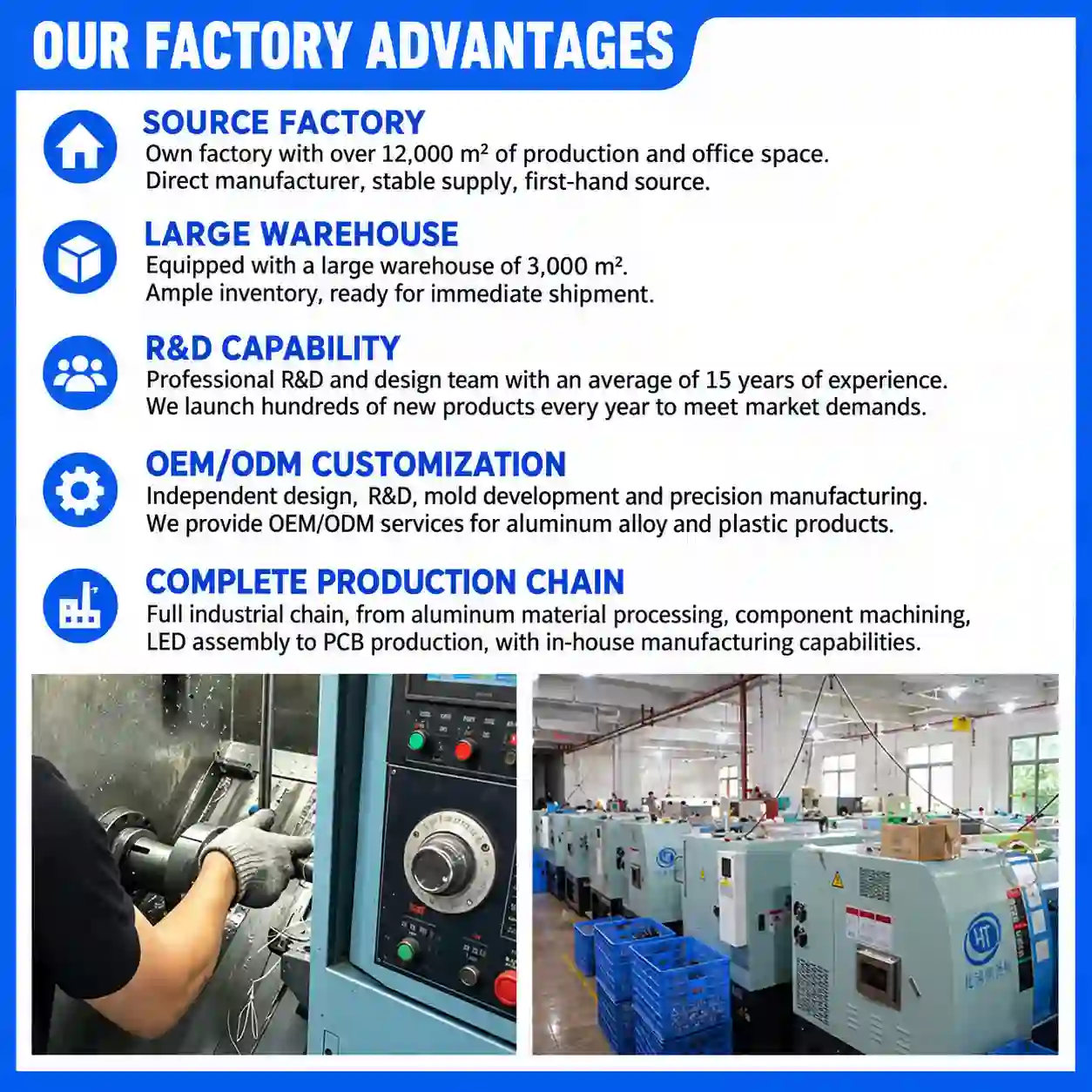
Raw aluminum is transformed into flashlight bodies, bezels, and tail caps. CNC lathes turn cylindrical bodies. Mills cut flats for anti-roll features. Tapping machines create threads for tail caps and bezels.
Key quality checks at this station include dimensional accuracy, thread engagement quality, and surface finish. A well-maintained CNC station produces consistent parts. A poorly maintained one produces variations that cause assembly problems later.
Station 3: Surface Treatment
Machined aluminum parts receive surface treatment to prevent corrosion and improve appearance. The typical process includes:
- Degreasing to remove machining oils
- Anodizing to create a hard oxide layer
- Color dyeing for black, grey, or custom colors
- Sealing to close the porous anodized surface
Anodizing quality determines how well the flashlight resists scratches and saltwater corrosion. Type III hard anodizing provides the best protection but costs more and requires longer processing time.
Station 4: Component Preparation
While bodies are being machined and anodized, other components are prepared. LED boards are soldered with precision equipment. Drivers are programmed with firmware. Springs are cut to length and tinned for soldering.
This parallel processing reduces overall lead time. But it requires tight inventory management to ensure all components arrive at assembly at the same time.
Station 5: Assembly
This is where the flashlight comes together. Assembly typically follows a linear workflow:
- Install driver into body
- Solder LED board to driver wires
- Press LED board into reflector
- Install reflector/LED assembly into head
- Install switch and tail cap
- Apply lubricant to threads
- Final torque of all components
Each step has a specific torque specification and visual inspection criteria.
Station 6: Testing and QC
After assembly, every flashlight is tested. Functional testing checks all modes and brightness levels. Mechanical testing includes drop tests and waterproof verification. Electrical testing confirms current draw and thermal regulation.
This station is the gatekeeper. Nothing leaves the factory without passing every test.
Station 7: Packaging and Shipping Prep
Passed units move to packaging. Flashlights are inserted into retail boxes with manuals and accessories. Boxes are packed into inner cartons, then master cartons. Shipping labels are applied, and the batch is staged for pickup.
Production Line Efficiency Metrics
| Metric | Good | Concerning |
|---|---|---|
| Yield rate | >95% | <90% |
| CNC uptime | >85% | <70% |
| Assembly cycle time | Consistent | Highly variable |
| QC rejection rate | 2-5% | >10% |
| On-time delivery | >95% | <80% |
Red Flags in Production Line Management
- One worker performing multiple unrelated stations (lack of specialization)
- No visible work instructions or quality checkpoints
- Large backlog of WIP between stations (bottleneck)
- Materials stored without batch identification (traceability issue)
- Assembly area disorganized with mixed components
Conclusion
A well-organized production line with clear stations and quality gates produces consistent, reliable flashlights. When you evaluate a manufacturer, walk through each station and ask what is checked at each step. The answers will tell you whether they are building products or just assembling parts.
Want to see our 7-station production line? Schedule a virtual factory tour and we will walk you through every step.