
Best Rechargeable Flashlights for Distributors in 2026: What Importers Need to Know Before Ordering
For wholesale buyers, the best rechargeable flashlight is the one that matches customer use, verified output, battery serviceability, charging compatibility, and landed cost. Compare samples, spare-part support, MOQ, and written production tolerances before approving a bulk order for your market.
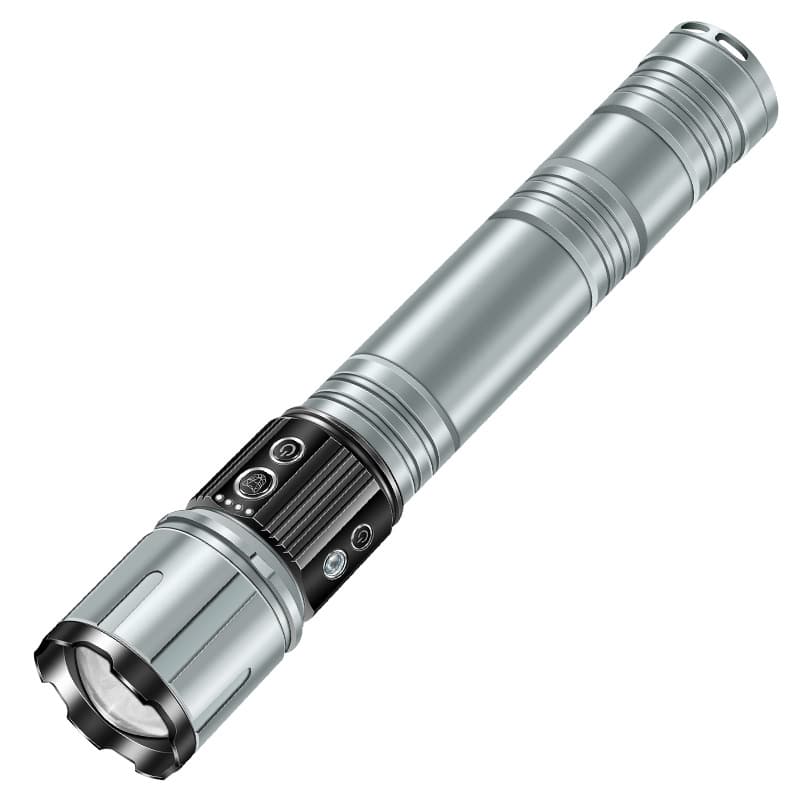
Why Rechargeable Flashlights Matter for Wholesale Buyers
The shift from disposable-battery flashlights to rechargeable tactical flashlight models is a significant product-line decision for distributors, but the benefits vary by market, end-user profile, and the distributor’s service capacity. Rechargeable flashlights can reduce end-user spending on replacement batteries over time, and some markets show increasing preference for rechargeable consumer electronics. However, the actual cost advantage, support burden, and resale margin depend on the specific product, warranty terms, and the distributor’s ability to handle battery-related service requests.
When evaluating the best rechargeable flashlight wholesale options for your catalog, consider how the product’s charging interface, battery configuration, and spare-parts availability align with your target market’s needs and your own service capabilities. Environmental regulations in some jurisdictions increasingly restrict disposable battery waste or mandate improved energy efficiency for consumer products. Distributors targeting the European Union, for example, should verify whether specific flashlight models or battery types fall under applicable Extended Producer Responsibility (EPR) or WEEE directives, and confirm their own compliance obligations rather than assuming universal applicability. Similarly, any claim that rechargeable flashlights universally command higher selling prices or margins should be verified against actual channel data for your target market.
The rechargeable category itself is not uniform. The term covers products with built-in lithium-ion cells, replaceable 18650 or 21700 battery compartments, USB-C ports, magnetic charging contacts, and proprietary dock systems. Each configuration carries different implications for warranty service, spare parts inventory, shipping compliance, and customer support. A distributor who treats all rechargeable flashlights as interchangeable risks mismatched inventory, unexpected return rates, and compliance headaches.
Core Procurement Comparison Table
The following table summarizes what distributors should request from suppliers and how to verify each item before placing a bulk order.
| Procurement Item | What to Request from the Supplier | How the Buyer Should Verify |
|---|---|---|
| Brightness and beam distance | Output specifications, test conditions, and related test reports | Cross-check the report against the exact model number, then replicate key measurements under agreed conditions |
| Battery | Cell model, capacity data, compatibility notes, and cell datasheets | Inspect physical markings, dimensions, and confirm fit and function in the sample unit |
| Runtime | Runtime per mode, cutoff conditions, and test methodology | Test runtime under the actual mode and battery state you plan to sell |
| Charging | Input specifications, charging time, and included or compatible accessories | Test the charging cycle, check port fit, and confirm accessory availability |
| Quality control | Inspection plan, batch records, and non-conforming product handling process | Inspect samples and incoming batches against the agreed acceptance criteria |
| MOQ and lead time | Per-SKU quantities, customization fees, and production schedule | Request written quotations and delivery confirmations with clear terms |
Key Evaluation Criteria for Wholesale Buyers
Before adding any rechargeable flashlight model to a wholesale catalog, distributors should evaluate the product across the dimensions covered in the comparison table above. The following sections break down each criterion with practical verification steps.
Charging Standard and Compatibility

The charging interface is the first point of failure for end users and the most common source of distributor returns. USB-C has become the dominant standard for consumer electronics, but the flashlight industry still ships products with Micro-USB ports, proprietary magnetic connectors, and cradle-style dock chargers.
From a wholesale perspective, USB-C offers a practical advantage: end users may already own compatible cables, potentially reducing support requests. However, not all USB-C flashlights support the same power delivery profiles. Some models charge at lower current and require longer cycles; others support higher current. Distributors should request the manufacturer’s charging specification sheet and confirm the input voltage range, maximum charging current, and estimated full-charge time under stated conditions. If your target market values dual-function products, review the power bank flashlight category for models that combine lighting with device charging.
Magnetic and dock chargers create a different challenge. These systems require the distributor to stock replacement cables or dock units, and proprietary designs may become unavailable if the manufacturer discontinues the model. When evaluating such products, ask the supplier for the minimum guaranteed spare-parts availability period and whether the charging accessory uses a standard pin configuration that third-party manufacturers could replicate.
Battery Type and Replaceability
Rechargeable flashlights fall into two structural categories: sealed units with non-removable cells, and models with user-replaceable batteries. Each approach serves different market segments and creates different distributor obligations.
Sealed designs simplify the user experience and allow manufacturers to optimize water resistance and impact protection. For distributors, the trade-off is that battery degradation becomes a warranty issue rather than a user-managed replacement. Ask the supplier for the expected cycle life based on the specific cell model used, the test conditions under which that figure was obtained, the warranty policy for capacity loss, and whether the manufacturer offers a paid battery replacement program. Do not accept generic cycle-life claims without reference to a specific cell datasheet and testing standard.
User-replaceable designs, most commonly using 18650 or 21700 cylindrical cells, extend product lifespan but introduce compatibility complexity. The 18650 format is widely available and familiar to flashlight enthusiasts, while the 21700 offers higher capacity in a slightly larger package. Distributors should confirm:
- Whether the flashlight accepts flat-top, button-top, or protected cells
- The maximum cell length the tube accommodates
- Whether the driver circuit requires a specific discharge current rating
- If the product ships with a cell included or if the distributor must source batteries separately
When batteries are not included, the distributor may need to coordinate sourcing cells that meet UN 38.3 testing requirements for safe transport. The exact documentation responsibility depends on how the batteries are shipped—installed in the device, packaged with the device, or shipped separately—and on the transport mode and applicable regulations. Buyers should request UN 38.3 test summaries from the battery supplier or the flashlight manufacturer, confirm the shipment configuration with their freight forwarder, and verify which party is responsible for dangerous-goods documentation before calculating landed costs.
Light Output Verification
Manufacturers routinely advertise lumen figures based on LED emitter specifications rather than measured flashlight output. A 1,000-lumen LED chip does not guarantee 1,000 lumens at the bezel, because optical losses, driver efficiency, and thermal throttling all reduce real-world performance. For a deeper look at how emitter technology affects real-world output, see our comparison of LEP vs LED flashlight beam throw.
Distributors should request an integrating-sphere test report from the manufacturer or conduct independent testing through a third-party laboratory. At minimum, verify:
- Turbo / maximum mode output in lumens
- Sustained output after thermal stabilization under stated conditions
- Runtime at the highest sustainable mode
- Peak beam intensity in candela
If the manufacturer cannot provide test data, consider the cost of independent verification against the potential damage to distributor credibility from selling underperforming products. For initial sample evaluation, a basic lux meter and a controlled-distance setup can reveal whether advertised beam intensity aligns with reality.
Spare Parts and After-Sales Support
Rechargeable flashlights contain more components subject to wear than simple mechanical models: charging ports, O-rings, switch assemblies, driver boards, and battery contacts. A wholesale partnership is only viable if the manufacturer can supply spare parts on reasonable timelines.
Before committing to a bulk order, request the manufacturer’s spare parts price list and minimum order quantities for common replacement items. Ask specifically about:
- Charging port or contact replacement units
- Switch boot and retaining ring sets
- O-ring kits for water-resistance maintenance
- Driver board replacement availability
- Lens or reflector replacement options
Lead times for spare parts often exceed standard production lead times. A manufacturer that quotes extended lead times for switch assemblies may be manageable for a distributor with repair capability, but problematic for a distributor who relies on the manufacturer for all warranty fulfillment.
Packaging and MOQ Considerations
Rechargeable flashlights require more protective packaging than disposable-battery models because impacts can damage internal cells, charging circuits, or the USB port. Distributors should evaluate the manufacturer’s retail packaging for:
- Cushioning material density around the head and tail
- Cable storage method (coiled, pouch, or separate compartment)
- Instruction manual inclusion and language coverage
- Certification label placement and legibility
- Barcode and SKU label accuracy
Minimum order quantity (MOQ) structures for rechargeable flashlights vary based on multiple factors, not just a simple standard-versus-custom distinction. Existing inventory levels, logo application method (laser, pad print, or label), packaging print requirements, color options, accessory bundling, and production line scheduling all influence the manufacturer’s minimum viable order. Distributors should request a written cost breakdown that separates unit production cost from setup and tooling amortization; this enables calculation of per-unit cost at different volume tiers. Only after receiving a supplier’s actual quotation should a distributor record specific MOQ figures.
Sample-to-Mass-Production Consistency
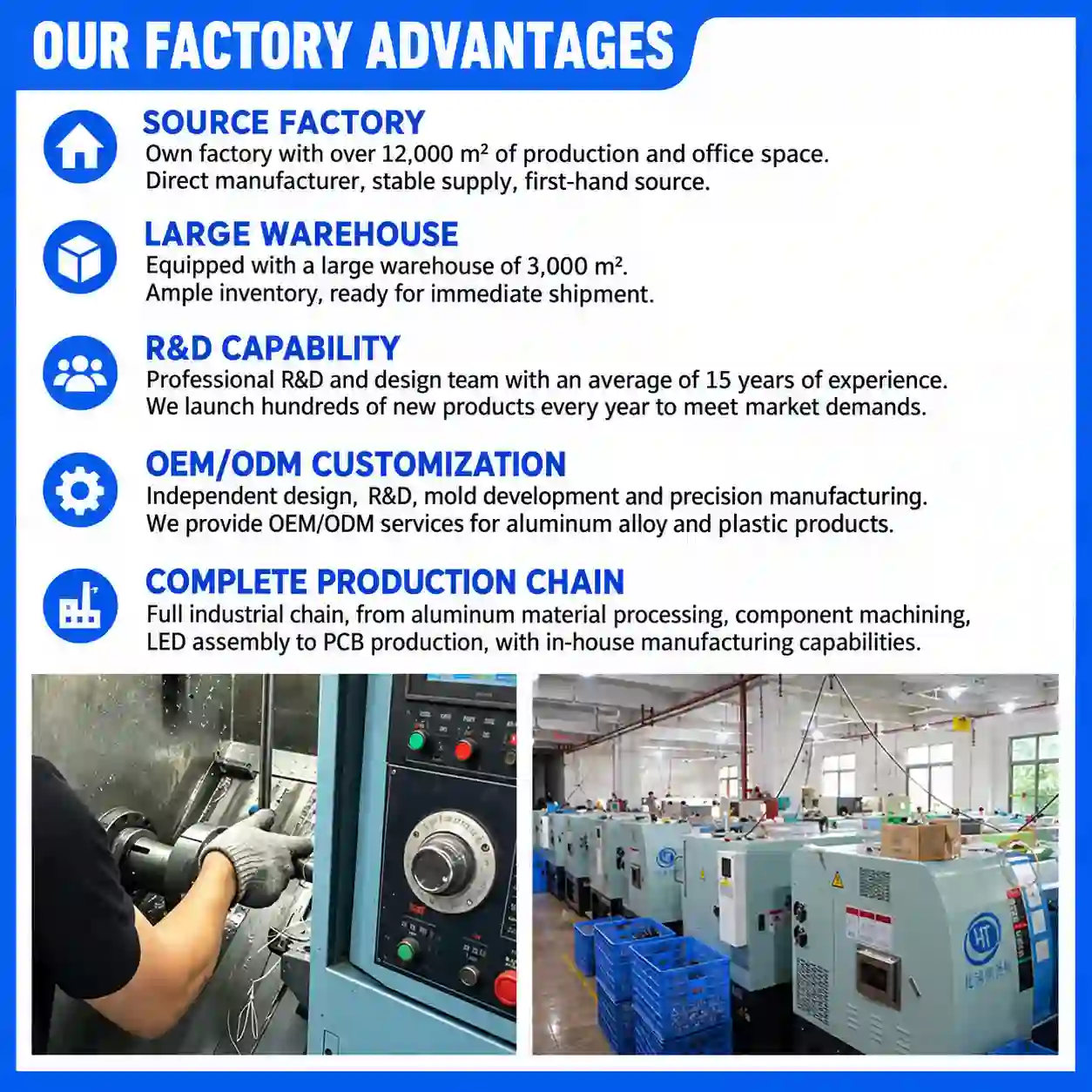
The sample phase is where most wholesale relationships succeed or fail. A wholesale tactical flashlight manufacturer can produce an excellent pre-production unit with hand-selected components and intensive QC attention. The challenge is ensuring that mass-production units match the sample.
Establish a written sample agreement that specifies:
- The exact production batch or serial number range bound by the sample
- Tolerance ranges for lumen output, runtime, and charging time
- Acceptable cosmetic defect categories and quantities per unit
- Dimensional tolerances for critical fit points (battery tube, O-ring grooves, charging port recess)
- Packaging specification version and revision date
- Procedures for handling engineering changes or component substitutions during the production run
When the first production batch arrives, conduct an incoming inspection against the sample agreement. Rather than spot-checking one or two units, agree with the manufacturer on a sampling plan before shipment. The plan should define the batch size, inspection standard, defect classification (critical, major, minor), and acceptance or rejection rules. Common industry frameworks such as AQL-based sampling can serve as a starting point, but the specific sample size and acceptance number must be tailored to the product, batch size, and your risk tolerance. Document any deviations with photographs, measurements, and lot numbers, and communicate findings to the manufacturer before accepting the shipment.
Wholesale Selection Scorecard
To compare multiple rechargeable flashlight suppliers systematically, distributors can use a scorecard that weights criteria by business priority. The following template assigns equal initial weights; adjust based on your market and risk tolerance.
| Criterion | Weight | Verification Method | Score (1-5) |
|---|---|---|---|
| Charging standard compatibility | 15% | Specification sheet + cable compatibility test | |
| Battery replaceability | 15% | Physical inspection + cell compatibility test | |
| Verified light output | 20% | Integrating sphere report or independent test | |
| Spare parts availability | 15% | Parts list + lead time quote | |
| Packaging protection | 10% | Drop test + transit simulation | |
| MOQ flexibility | 15% | Negotiation + cost breakdown analysis | |
| Sample-to-production consistency | 10% | Incoming inspection against sample agreement |
A supplier scoring below 3.0 on verified light output or sample consistency should be reconsidered regardless of price advantage. These two criteria directly affect end-user satisfaction and return rates, which cost distributors more than a slightly higher unit price over the product lifecycle.
Risk Checklist for Distributors

Rechargeable flashlight wholesale carries specific risks that distributors can mitigate through pre-order verification. The following checklist pairs each risk with the evidence or action required.
| Risk | Check Method | Required Evidence or Action | Procurement Measure |
|---|---|---|---|
| Battery shipping restrictions | Confirm shipment configuration with freight forwarder | UN 38.3 test summary, MSDS, and compliant inner packaging labels from the responsible party | Require documentation before shipment; verify who bears dangerous-goods classification responsibility. For broader context on supply chain factors, see our flashlight industry supply chain analysis. |
| Thermal throttling not disclosed | Request runtime graphs and step-down specifications | Written specification of turbo duration and sustained output level | Reject products whose marketing materials omit step-down behavior |
| Charger region incompatibility | Check adapter voltage range and plug type | Adapter specification sheet or confirmation of USB-C-only design | Order region-specific SKUs or specify universal voltage (100-240V) adapters |
| Warranty claim disputes | Define claim handling in the purchase agreement | Written agreement on who handles end-user claims, diagnostic criteria, and turnaround time | Clarify battery degradation diagnostics and equipment requirements before signing |
| Spare parts discontinuation | Request minimum availability commitment | Written spare parts availability period and last-buy notification terms | Negotiate last-time-buy rights or stock critical spares at first order |
Wholesale RFQ Checklist for Rechargeable Flashlight Orders
Before contacting a flashlight manufacturer or supplier for a quotation, prepare the following information. A complete RFQ reduces back-and-forth, helps the supplier provide an accurate quote, and improves the quality of the response you receive.
- Target market and intended sales channels: Specify the countries or regions where you plan to sell, and whether the product will move through retail, e-commerce, B2B, or institutional channels. Regulations, certifications, and packaging requirements vary by channel and destination.
- Required models, brightness, and beam distance: List the product categories or specific model numbers you are evaluating. Include your minimum acceptable lumen output, beam distance requirements, and any mode preferences (e.g., turbo, high, medium, low, strobe).
- Battery type and charging interface requirements: State whether you prefer built-in cells, user-replaceable 18650/21700 compartments, or a mix. Specify the charging interface (USB-C, magnetic, or proprietary dock) and whether you require included charging accessories.
- First order quantity and projected reorder volumes: Provide your estimated first-order quantity and any forecast for repeat purchases. This helps the supplier propose appropriate MOQ and pricing tiers.
- Logo, packaging, and language customization: Describe any branding requirements (logo method, position, colors), packaging design needs, and the languages required for instruction manuals and labeling.
- Target delivery timeline and destination: State your required in-hand date, the delivery address or port, and your preferred shipping method. Note any seasonal or event-driven deadlines.
- Testing documents and quality records required: List the certificates, test reports, and inspection records you need the supplier to provide (e.g., CE, RoHS, FCC, UN 38.3, integrating-sphere output test, IP rating test).
Conclusion and Next Steps
The best rechargeable flashlight wholesale selection is not about finding a single perfect product—it is about identifying the configuration that aligns with your customers’ use cases, your service capacity, and your target market’s regulatory environment. The key findings from this evaluation framework are:
- USB-C charging and user-replaceable batteries can reduce long-term support burden, but only if spare parts and cell compatibility are confirmed in writing
- Independent lumen verification protects distributor reputation; do not rely on emitter specifications alone
- Written sample agreements with tolerance ranges, change-control procedures, and inspection protocols prevent mass-production disputes
- Spare parts availability determines whether a product line remains viable after the first production run
- MOQ negotiation should be grounded in the supplier’s actual cost structure, not treated as a fixed barrier
- A complete RFQ with clear technical, commercial, and documentation requirements yields more accurate quotations and faster supplier responses
For distributors ready to evaluate specific rechargeable flashlight models, the next step is to prepare the Wholesale RFQ Checklist above, request samples from shortlisted manufacturers, and run them through the scorecard criteria. Document every test result, photograph defects, and maintain a file of sample agreements and inspection records. This documentation becomes the foundation for consistent product quality and reliable supplier relationships.
If you are evaluating best rechargeable flashlight wholesale options for your catalog and need clarification on charging specifications, battery compatibility, or sample verification procedures, contact VZJlight with the RFQ Checklist prepared and specific questions tied to your target market requirements.
For authoritative guidance on USB-C charging standards, refer to the USB Implementers Forum specifications. For information on international dangerous goods transport regulations, consult the UN Recommendations on the Transport of Dangerous Goods.