
Why Video Calls Are Becoming Mandatory in Flashlight Supplier Evaluation
For video call supplier evaluation professionals, understanding Why Video Calls Are Becoming Mandatory in Flashlight Supplier Evaluation is essential for making informed procurement decisions. This guide reveals what experienced buyers look for and how suppliers can meet those expectations.
Why Why Video Calls Are Becoming Mandatory in Flashlight Supplier Evaluation Matters for Wholesale Buyers
A professional buyer evaluating flashlight suppliers recently shared a story that illustrates the core problem. After three weeks of correspondence with a manufacturer whose product images looked exceptional, the sample batch arrived with machining marks, off-center LEDs, and anodizing streaks visible to the naked eye. The supplier had used AI-enhanced photography to conceal production inconsistencies. The buyer walked away, three weeks wasted.
This scenario repeats daily in B2B procurement. Buyers place trust in visual evidence, and when that evidence is manipulated — whether through AI enhancement, selective lighting, or strategic angles — the trust is misplaced. The result is not merely a lost sale for the supplier; it is a lost opportunity cost for the buyer, who must restart the supplier search from zero.
The underlying issue is information asymmetry. Suppliers know their products intimately. Buyers see only what the supplier chooses to show. When the chosen presentation is optimized for emotional appeal rather than factual accuracy, the buyer enters the relationship with a false baseline. Every subsequent interaction — sample evaluation, price negotiation, quality discussion — happens in the shadow of that initial misrepresentation.
What Professional Buyers Evaluate in Video Scenarios
Experienced procurement managers develop evaluation frameworks that go far beyond product specifications. These frameworks are shaped by past disappointments, supplier audits, and the hard-learned lesson that specification sheets can be technically accurate while still misleading.
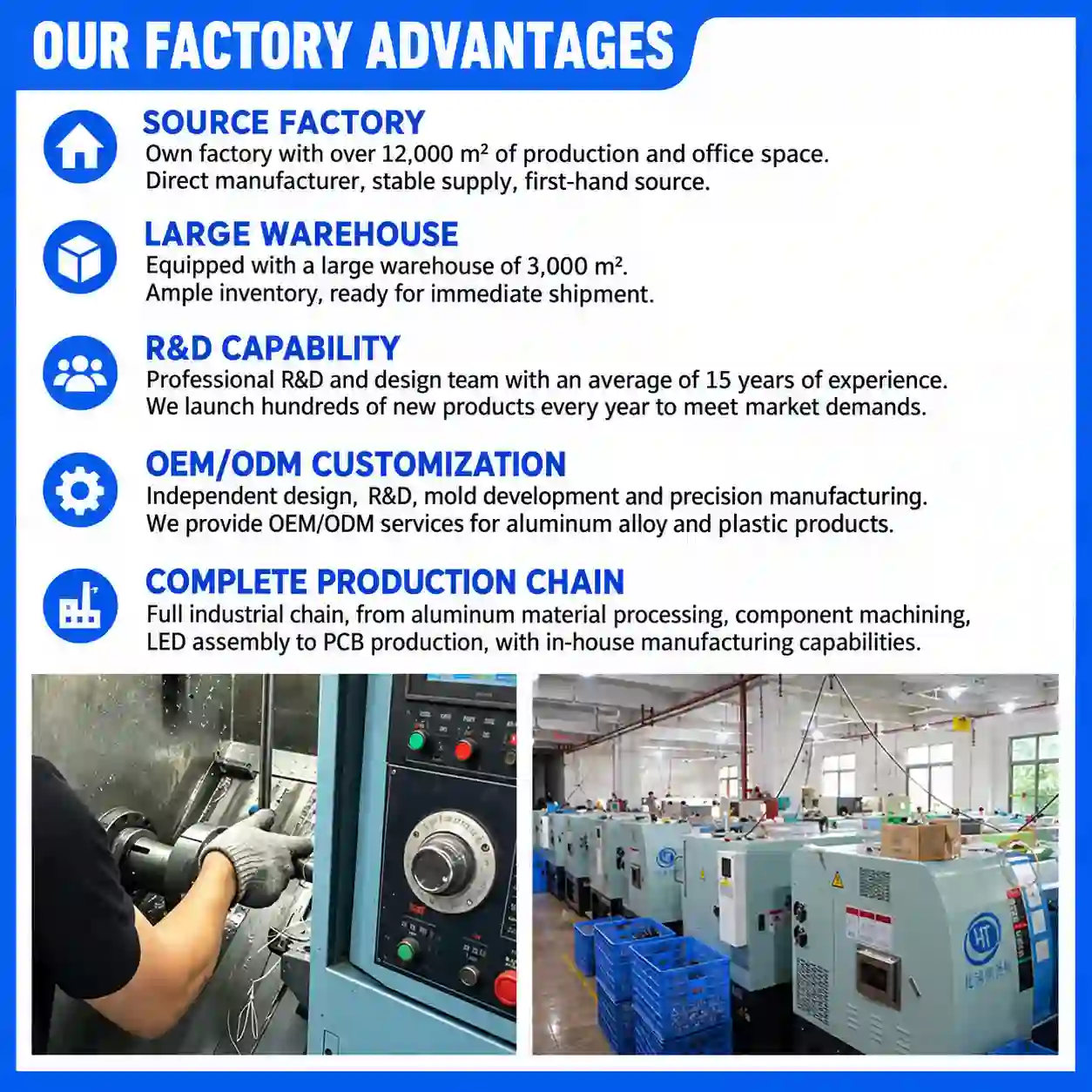
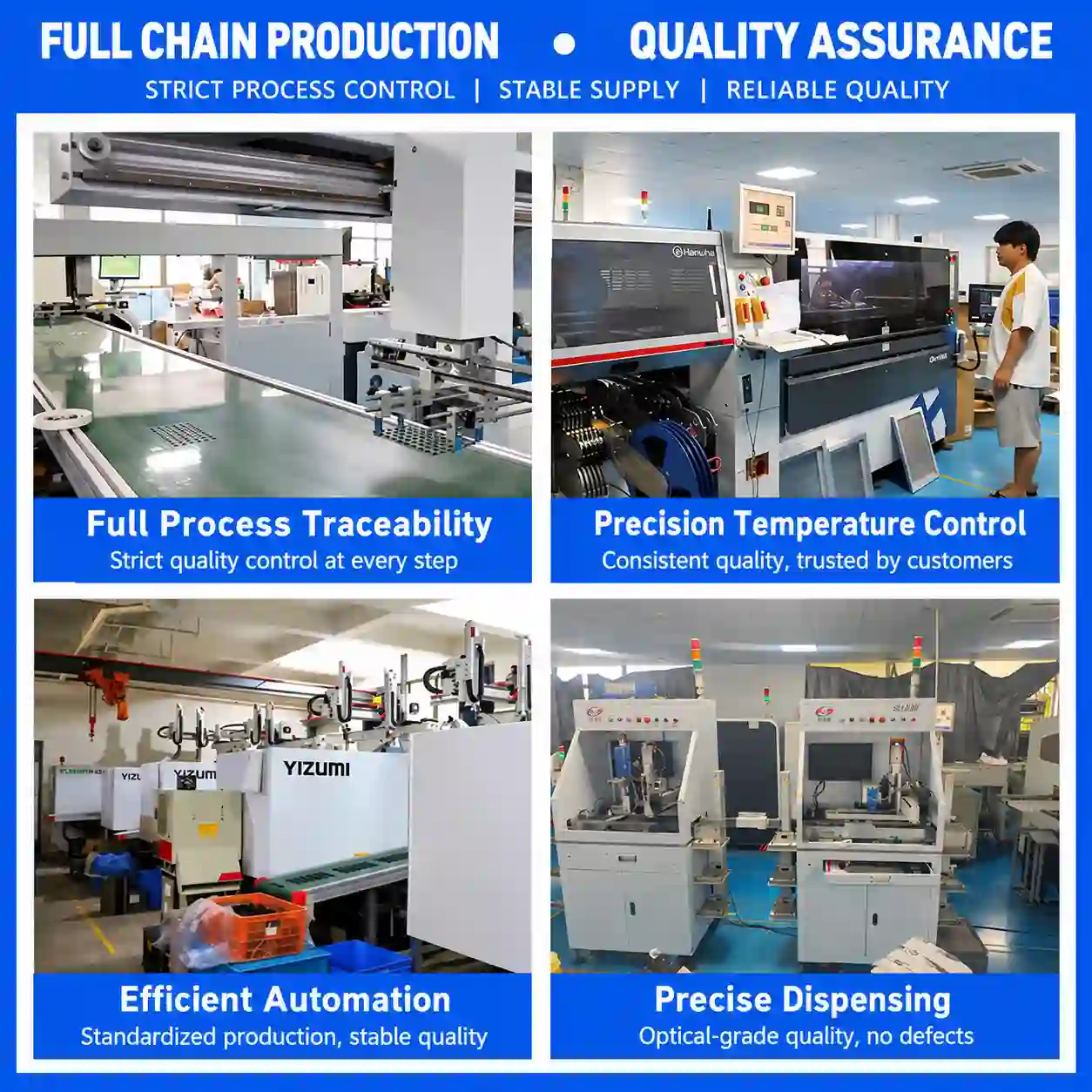
Manufacturing context. Buyers want evidence that the product is being made, not merely designed. Photos showing active production lines, work-in-progress inventory, and QC stations signal operational capability. A supplier who only shows finished products on white backgrounds raises the question: where are these products coming from?
Batch consistency. A single perfect sample tells the buyer nothing about mass production quality. Buyers look for evidence of batch-to-batch variation — ideally in the form of multiple units photographed together. If five units from the same production run all show identical anodizing color and LED alignment, the buyer gains confidence in the supplier’s process control.
Packaging reality. The product that arrives at a distributor’s warehouse is not the product on the supplier’s website. It is the product plus packaging, plus labeling, plus whatever surprises the shipping process introduces. Buyers need to see the actual export packaging, the inner carton configuration, and the individual unit protection before they can plan inbound handling.
Documentation depth. Buyers evaluate suppliers by the thoroughness of their documentation. A supplier who provides test reports, material certifications, and process flowcharts is demonstrating organizational maturity. A supplier who provides only a specification sheet and a price list is asking the buyer to trust what cannot be verified.
Buyer Evaluation Matrix: Video Decision Factors
The following table summarizes the evaluation criteria that professional buyers apply when assessing flashlight suppliers. Each criterion includes what the buyer looks for and what supplier behavior signals confidence versus risk.
| Evaluation Factor | What Buyers Want to See | Red Flag Signal |
|---|---|---|
| Product photography | Raw factory images with environmental context | Only studio renders or AI-enhanced shots |
| Manufacturing evidence | Production line photos, batch labels, QC marks | No factory context; only finished products shown |
| Sample quality | Realistic samples with documented variation | Hand-picked perfect samples; no variation disclosed |
| Communication depth | Technical questions answered thoroughly | Generic responses; price-focused only |
| Documentation | Test reports, certifications, process flows | Only specification sheet provided |
| Packaging details | Export carton, inner box, unit wrap shown | Packaging not discussed until after order |
How Supplier Behavior Reveals Video Reliability
Supplier actions during the pre-order phase are highly predictive of post-order outcomes. Buyers who understand these behavioral signals can filter out risky suppliers before committing capital.
Speed of response. A supplier who responds to technical inquiries within hours is demonstrating engagement. A supplier who takes days to respond to simple questions is either overloaded, uninterested, or operating through intermediaries who must relay questions. None of these explanations inspires confidence.
Question depth. Suppliers who ask detailed questions about the buyer’s market, target price point, and quality expectations are gathering the information needed to serve the account properly. Suppliers who ask only about quantity and delivery date are optimizing for transaction speed rather than relationship quality.
Sample willingness. A supplier who resists providing samples — or who charges excessive sample fees — is signaling either production inflexibility or financial instability. Established manufacturers view samples as a standard cost of business development. Reluctance to invest in sample production suggests the supplier does not expect repeat business.
Problem disclosure. The most trustworthy suppliers proactively disclose limitations. They mention that a particular LED batch has tint variation. They note that anodizing color shifts slightly between production runs. They explain that a certain feature requires a tooling change that extends lead time. This honesty seems counterintuitive to sales-focused suppliers, but buyers consistently rate transparency as the most important supplier trait.
Practical Steps for Video Buyers and Suppliers
Whether you are a buyer evaluating suppliers or a supplier seeking to improve your B2B conversion, the following steps provide a concrete starting point.
For buyers: Request unedited factory photos before placing sample orders. Ask the supplier to photograph five random units from the current production batch rather than selecting the best ones. Compare the supplier’s specification sheet against the sample unit, marking every discrepancy for discussion. Document packaging requirements in writing before order confirmation. Verify that the supplier’s quoted test standards match the certifications they claim to hold.
For suppliers: Replace your most polished product render with an unedited factory photo on your primary product page. Add a “Production Reality” section to your catalog that shows batch variation, packaging details, and common cosmetic characteristics. Respond to technical inquiries with detailed answers rather than price quotes. Proactively disclose product limitations in your initial communication. Invest in consistent factory lighting so your raw photos look professional without requiring enhancement.
For both parties: Establish clear acceptance criteria before production begins. Define what constitutes a cosmetic defect versus a functional defect. Agree on inspection sampling plans and rejection protocols. Document these agreements in writing, not verbally. The thirty minutes spent clarifying expectations before production saves thirty hours of dispute resolution after delivery.
Conclusion: Building Trust Through Video Transparency
The B2B flashlight market in 2026 is characterized by information asymmetry. Buyers need reliable products. Suppliers need reliable customers. Both parties benefit from transparent communication, yet market incentives often push suppliers toward polished presentation over honest disclosure.
Buyers who develop systematic evaluation frameworks — examining manufacturing context, batch consistency, documentation depth, and supplier communication behavior — reduce their risk of costly supplier failures. Suppliers who embrace radical transparency — showing their products as they actually exist, documenting their processes honestly, and proactively disclosing limitations — differentiate themselves in a crowded market.
The future of B2B flashlight procurement belongs not to the suppliers with the best photography, but to the suppliers with the most trustworthy presentation. Buyers are becoming more sophisticated. They can spot AI enhancement, recognize stock photography, and identify when a factory tour photo was staged rather than candid. The suppliers who win in this environment are those who treat buyer skepticism not as an obstacle to overcome, but as a rational response that they can address through evidence.
If you are evaluating flashlight suppliers and want to see what transparent B2B communication looks like, review our approach to factory-direct product documentation. If you are a supplier looking to improve your buyer conversion rates, start by showing one honest photo for every polished render — and measure the difference in sample-to-order conversion.