
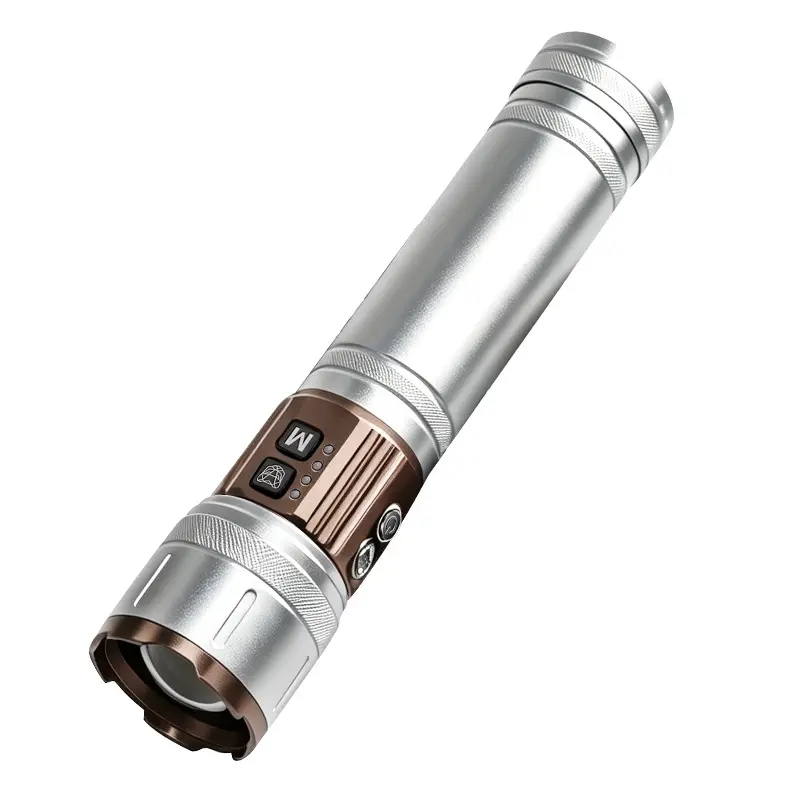
What Is a White Laser Flashlight? Understanding LEP Technology for Distributors in 2026
For wholesale buyers evaluating white laser flashlight technology, understanding LEP fundamentals helps product selection and customer education. Compare beam characteristics, component structure, and application fit before adding LEP products to your catalog.
What Is LEP Technology?
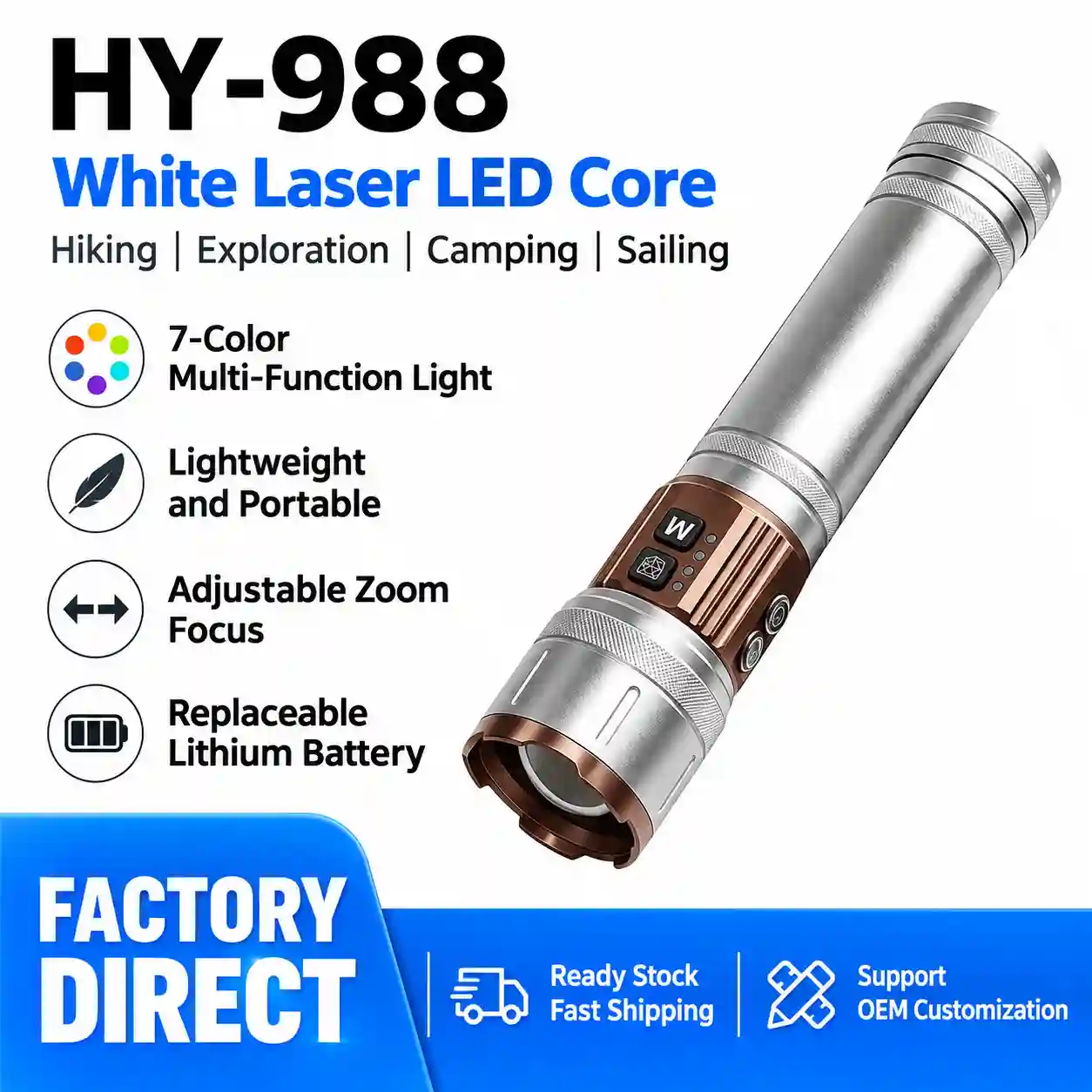
LEP stands for Laser Excited Phosphor. Unlike conventional LED flashlights that use a semiconductor diode to produce light directly, LEP flashlights use a laser diode to excite a phosphor layer, which then emits white light. The result is an extremely concentrated, highly collimated beam with exceptional throw distance.
The key components of an LEP module include:
- Laser diode: Typically a blue laser that provides the excitation energy
- Phosphor layer: Converts blue laser light into broad-spectrum white light
- Optical system: Collimates and shapes the emitted light into a usable beam
- Heat sink: Manages the thermal output of both the laser and phosphor
How LEP Differs from LED
| Characteristic | LED Flashlight | LEP Flashlight | Distributor Impact |
|---|---|---|---|
| Beam pattern | Broader hotspot with significant spill | Tight hotspot with minimal spill | LEP better for long-distance; LED better for area lighting |
| Throw distance | Moderate to high | Very high | LEP commands premium in search and tactical markets |
| Color rendering | Generally good (CRI 70-90+) | Variable; depends on phosphor | Verify CRI if color accuracy matters to your market |
| Module cost | Lower, multiple supplier options | Higher, fewer suppliers | LEP products have higher unit cost and MOQ |
| Module lifespan | Well established (50,000+ hours) | Shorter track record | Verify warranty terms and module availability |
| Power consumption | Efficient at moderate outputs | Efficient at high throw | Runtime comparisons must use comparable use cases |
Applications Where LEP Excels
LEP technology is not universally superior to LED, but it excels in specific applications:
- Long-range search: Search and rescue, border patrol, and maritime search where beam distance is critical
- Tactical operations: Perimeter security and threat identification at extended distances
- Industrial inspection: Remote visual inspection of infrastructure, power lines, and pipelines
- Wildlife observation: Minimal spill reduces disturbance to surrounding area
The LEP vs LED comparison provides detailed technical analysis for distributors evaluating both technologies.
Product Positioning for Distributors
LEP flashlights occupy a premium niche in the flashlight market. Positioning should emphasize:
- Beam distance advantage over comparable LED products
- Application-specific benefits rather than general superiority
- Professional and enthusiast targeting rather than mass-market appeal
- Technical specifications with real-world context
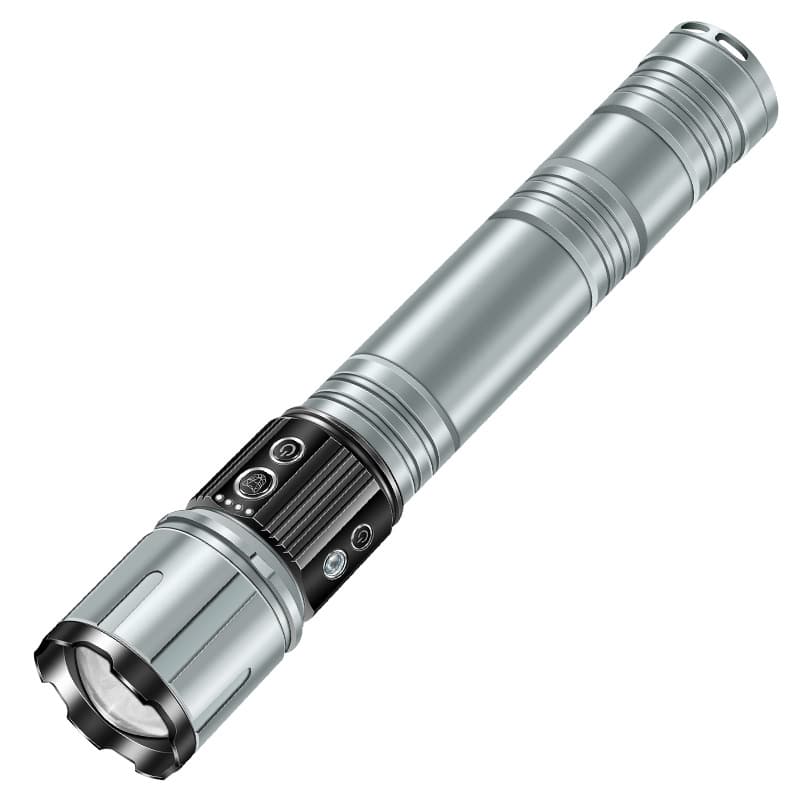
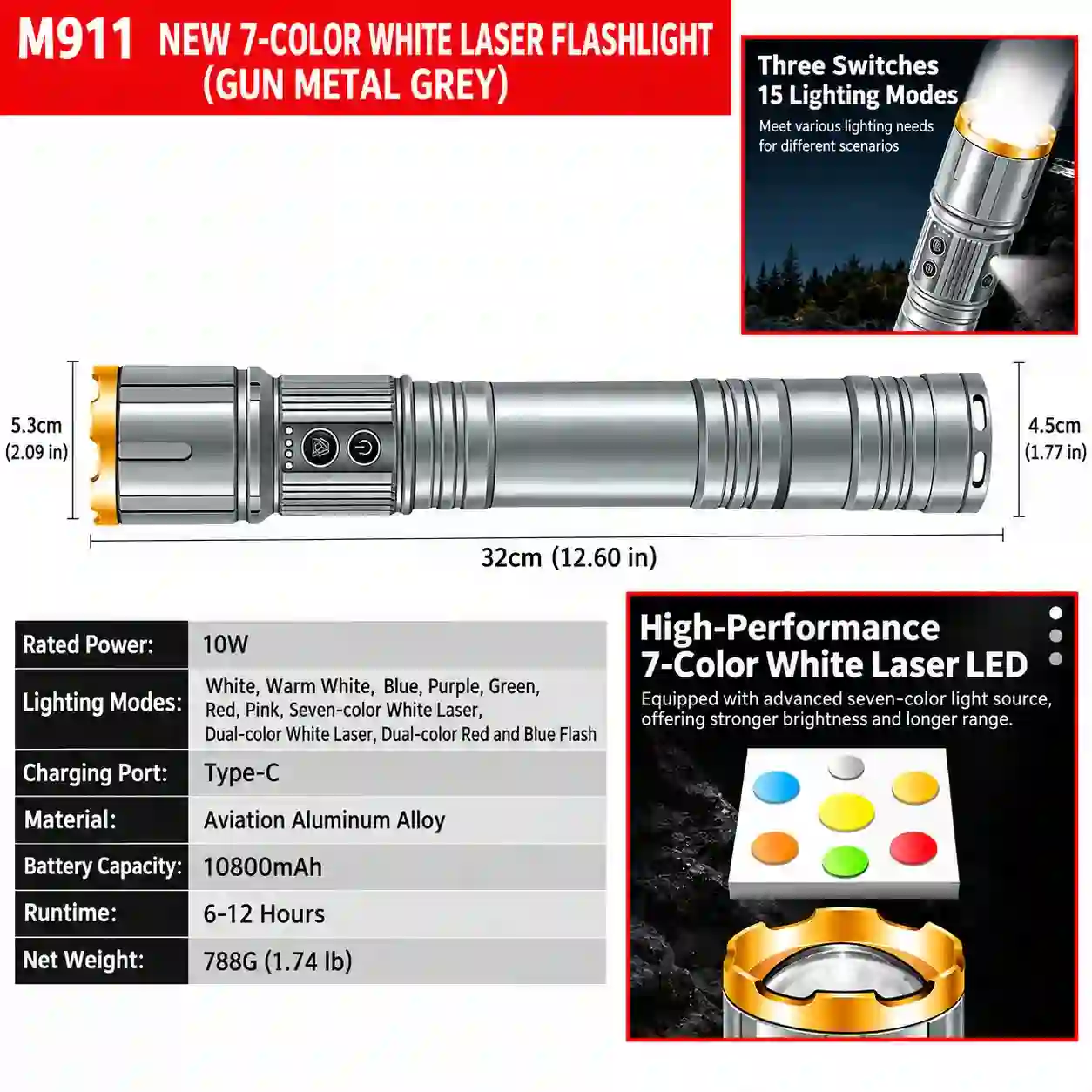
The white laser flashlight category demonstrates how LEP products are positioned for long-distance search applications.
Sourcing Considerations
LEP module sourcing is more concentrated than LED sourcing. Distributors should verify:
- The LEP module manufacturer and their production capacity
- Module availability and lead times
- Replacement module availability for warranty service
- Whether the flashlight manufacturer has alternative module sources
Supply chain concentration creates both quality consistency and availability risk. Diversify LEP product lines across multiple manufacturers if possible.
Conclusion and Next Steps
LEP technology offers genuine advantages for long-throw applications but is not a replacement for LED in general-purpose lighting. Distributors should evaluate LEP products based on target application fit, module supply security, and premium market positioning.
If you are evaluating white laser flashlight products for your catalog, contact VZJlight with your target applications and volume requirements for LEP product recommendations.