
The Real Cost of a $5 Flashlight vs a $50 Flashlight
Summary: A $5 flashlight and a $50 flashlight use completely different components, processes, and quality standards. Understanding the real manufacturing cost breakdown helps buyers make informed decisions about what price point matches their quality requirements.
Introduction
You see two flashlights that look similar. One costs $5, the other $50. The $5 version seems like a bargain. But the price difference reflects fundamental differences in materials, components, and quality control that directly affect performance and reliability.
This article breaks down exactly what you get at each price point and what corners are cut to reach lower prices.
The $5 Flashlight: Where Costs Are Cut
LED: Generic, Low-Bin
$5 flashlights use unbranded LEDs from second-tier manufacturers. Color temperature varies between units. Lumen output is typically 30-50% below claimed ratings. Lifespan is shorter due to lower thermal tolerance.
Body: Thin, Recycled Aluminum
Wall thickness is reduced to save material. Threads are cut quickly with minimal precision. Anodizing is thin Type II that scratches easily.
Driver: Basic Resistor Circuit
Instead of a regulated driver, a simple resistor limits current. This wastes battery power and provides no thermal protection.
Battery: Unbranded, Low Capacity
Batteries often have inflated capacity claims. Safety protection circuits are minimal or absent.
QC: Visual Only
Most $5 flashlights receive only a quick visual check. No functional testing, no lumen verification, no drop testing.
The $50 Flashlight: What You Pay For
LED: Branded, Binned, Tested
Cree, Samsung, or Nichia LEDs with verified bins. Consistent color temperature and lumen output across units. Higher thermal tolerance for longer lifespan.
Body: T6061, Type III Hard Anodizing
Aircraft-grade aluminum with thicker walls. Precision-cut threads. Type III hard anodizing resists scratches and saltwater corrosion.
Driver: Regulated, Protected
Constant current regulation maintains brightness as battery drains. Thermal protection prevents LED damage. Reverse polarity protection prevents damage from incorrect battery installation.
Battery: Branded, Protected
LG, Samsung, or Panasonic cells with verified capacity. Integrated protection circuit prevents overcharge, over-discharge, and short circuit.
QC: Multi-Station Testing
Every unit tested for function, output, waterproofing, and mechanical durability.
Cost Breakdown Comparison
| Component | $5 Flashlight | $50 Flashlight |
|---|---|---|
| LED | $0.30 | $3.00 |
| Aluminum body | $0.80 | $4.00 |
| Driver | $0.40 | $3.50 |
| Battery | $0.50 | $4.00 |
| Switch and hardware | $0.30 | $1.50 |
| Labor | $0.80 | $3.00 |
| QC and testing | $0.10 | $2.00 |
| Overhead and margin | $1.80 | $29.00 |
| Total | $5.00 | $50.00 |
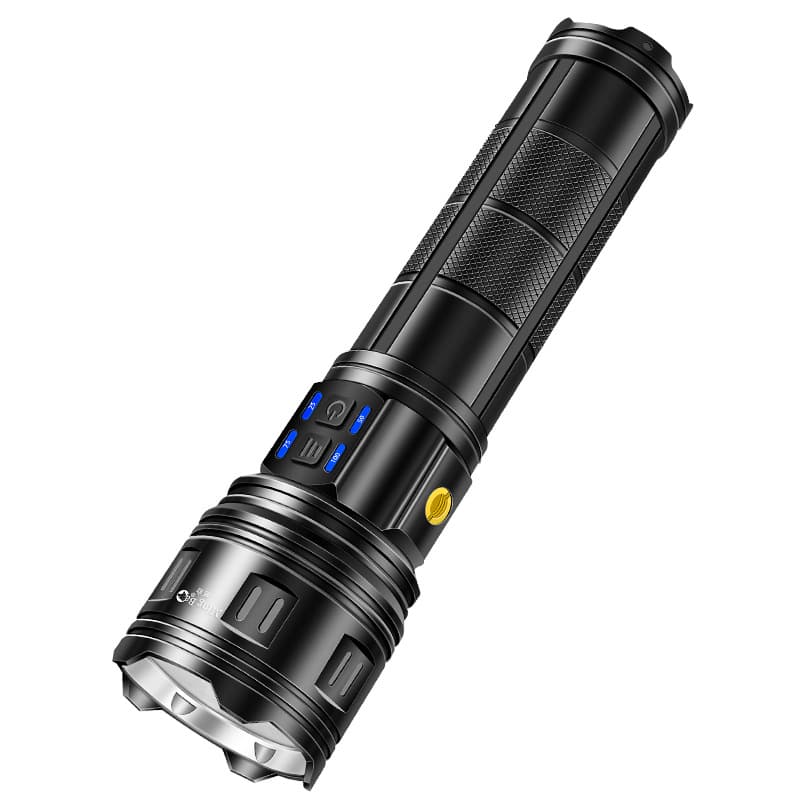
The Middle Ground: $15-25 Flashlights
Most buyers do not need $50 flashlights. The $15-25 range offers the best balance for general use:
- Decent branded or second-tier LEDs
- Standard aluminum with acceptable anodizing
- Basic regulated drivers
- Functional QC testing
Conclusion
Price reflects reality in flashlight manufacturing cost. The $5 flashlight is not a bargain—it is a disposable product. The $50 flashlight is not overpriced—it is built to last. Understanding this breakdown helps you choose the right product for your market and margin requirements.
Need help choosing the right price point? Contact us to discuss your target market and quality requirements.